Categories
News

InterAct secures year-long extension funding to amplify impact of Network

Professor Jan Godsell will continue to co-direct the InterAct Network alongside Professor Jill MacBryde. This new phase of the Network’s development will focus on harnessing short-term resource and energy efficiency benefits offered by the adoption of new IDTs in manufacturing.

The InterAct Network was launched in November 2021, as part of UKRI’s £147m Made Smarter Innovation programme. InterAct’s long-term vision has been to build a vibrant interdisciplinary community that can support UK manufacturing in the adoption of IDTs to develop a stronger, more resilient, manufacturing base.

InterAct has proven distinct from many projects within the Made Smarter Innovation programme due to its focus on social science and the integral role of people in the process of technological innovation.

The Network has funded 51 projects over the course of three years, uncovering a range of ‘actionable human insights’ which continue to support the UK manufacturing sector’s drive for digitalisation.

The funding extension is designed to help amplify the impact of InterAct in three ways. Firstly, by providing further funding to Interact projects that can be rapidly scaled or spun out. Secondly, by highlighting activities that support the rapid adoption of low-cost, low-risk IDTs by SMEs, and finally, through targeted high-impact research.

Professor Godsell said: “When we set out on the journey to create the InterAct Network, we had high hopes for what we could accomplish, but the project has exceeded our expectations.

“With over 700 members, and partners from across the UK and global manufacturing sectors, InterAct has been a truly collaborative exercise in building a vision for a more sustainable, productive, and digitally enabled future.

“We’re delighted to receive this extension funding, which will allow us to accelerate the adoption and scale-up of IDTs by UK SMEs, improving their energy and resource efficiency, and export potential.’

Professor MacBryde added: “We’re excited to be continuing the fantastic work we’ve been involved in over the past three years, putting people back at the heart of the project to increase digitalisation in manufacturing. This is a huge step forward in achieving consistent recognition of human insight as a key component of technological progress.”

The most recent round of funding comes from the £37 million allocated in the government’s Autumn budget to the Made Smarter Innovation programme. The extension has been funded through an Innovate UK grant, in collaboration with the ESRC and EPSRC.

Categories
InterAct Blog

Crafting future jobs in digital manufacturing

We often speak about how new industrial digital technologies (or IDTs – e.g. Smart, AI, robotics and algorithms) will reshape the future content of tasks, jobs and careers in manufacturing without fully appreciating that the future is already here. These IDT technologies have already started to change the landscape of people’s experiences of manufacturing work in some quite fundamental ways.

Views about the impact of IDTs on working in manufacturing can often seem extreme or hesitant and uncertain. In some media, IDTs are portrayed like a proverbial comet, a harbinger of malign portent that will lay merciless waste to our industrial legacies of factories of jobs, tasks and skills. Many workers many not like this kind of change and it’s not surprising that for some, resisting technological shifts to well established patterns of working will seem ‘hard-wired’, while for others their fast emergence and adoption creates job performance pressures and uncertainty about their future security.

While Industry 4.0 technologies will inevitably continue to auto-pilot and eliminate dull, dirty, risky and repetitive (especially manual) tasks, the better (and more mundane) news is that digital technologies will be a co-pilot for most manufacturing workers, augmenting and supporting their daily tasks and workloads.

Picking up on this latter theme, surveys that we conducted through InterAct clearly show strong beliefs that manufacturing futures will be technology-led with important implications for working in the sector.

When we ask about jobs, most people and employers believe in augmented more sustainable technological futures: more upskilling than down skilling, cleaner jobs that are more interesting and rewarding for workers, and that technologies will enable more creativity. However, our survey findings are not all good news. A significant proportion of people are very uncertain about the impact of technology for manufacturing workers, and a good few employers think there will be fewer jobs available. Perhaps not surprisingly, young people in Gen Z are more positive about future technology and jobs than older cohorts.

This highlights a recuring feature in wider research. The more positive people are about technological change, the more likely they are to use it as an opportunity to improve their job quality: modifying their tasks, making efficiencies, developing their digital skillsets and feel more engaged at work. This is one way in which IDT technologies are very likely to make manufacturing jobs more interesting, rewarding and creative as workers start to learn new ways to make them useful.

Many workers after all have already blended social media apps with their working practices to better organise individual and team working. Recent research also shows that workers can allay some of their tech fears by changing: the task boundaries of their jobs to focus more on the bits that people do well such as problem solving, quality control, process improvement and innovation, and customer service; by building deeper relationships, expanding their social networks with colleagues, supervisors, suppliers and customers; and, interestingly, by reframing the tech problem as a developmental opportunity that will also help them and their companies with performance and productivity.

We call this process of how workers adjust to and cope with technological change at work, job crafting. The rationale for crafting is that in a changing world of work, with more diverse workplace settings, people and emerging new technologies, workers are better able and placed to make changes to their job demands and resources beyond their core tasks and still achieve company goals and outcomes.

Companies can build job crafting into their practices and recent research suggests that interventions – skills and training programmes, career development pathways and even something as simple as upping the quality of a line-manager’s performance feedback – can enhance employees’ engagement with job crafting and facilitate technology adoption. By incorporating job crafting into their people strategies, companies can create and support environments that enable individual employees and teams to proactively shape their work and successfully integrate digital tools into their workflows.

So, what is ‘job crafting’?

Job crafting refers to discretionary behaviours aimed at making work resources and demands better aligned with people’s talents, skills and capabilities. As a process, job crafting is where workers try to balance otherwise challenging and stressful job demands (e.g. high or intense workloads, difficult team members or customers) with job resources that allow them to better cope with these demands and/or promote personal growth or skill development (e.g. training, supervisor or peer support). Worker’s ‘craft jobs by:

  • Seeking resources (actions to increase resources through for example, mentoring and coaching, supervisor and peer supports, learning and training, performance feedback, more task autonomy and improvements in workspaces, software’s and equipment)
  • Seeking challenges (actions looking for additional job demands that are in alignment with their interests and/or career aspirations through for example, proposing improved ways of working, taking on new projects/activities, supervisor or leadership roles, and expanding professional networks)
  • Reducing and/or optimising demands (actions designed to reduce job demands by task swapping with colleagues, streamlining efficiencies in tasks and processes, and suggesting improvements to team leaders, supervisors and managers).

In short, job crafting is a positive response by individuals and teams to job design with the aim of making work more engaging and meaningful.

Job crafting has also been applied in team-based collaborative settings. Not every team member has to craft the same aspects of their jobs; instead, it is the process of collectively synergizing efforts and deciding together what and how to craft towards team goals. Where teams have clearly defined shared goals and support each other, they are more motivated to craft their team’s daily workloads.

Sounds great, but is it applied in manufacturing?

Job crafting techniques work in practice and have been successfully applied in many sectors, including manufacturing. They have been shown to have positive outcomes for individual workers in terms of increased job satisfaction and lower levels of burnout, and better organisational outcomes in terms of performance and less turnover. In manufacturing, studies have linked job crafting with better work engagement, more autonomy, improved innovation performance and more effective change management in relation to working practices around IDT’s. Job crafting can provide the bridge between more engaged workers and better performance. It seems to work particularly well with getting more out of highly motivated, committed workers and those who feel they are under-utilised. And in manufacturing, the benefits of job crafting don’t just apply to the usual suspects – knowledge workers and those in leadership, managerial and administrative positions – it also works for production workers. Recent international research shows that job crafting is strongly associated with positive outcomes for production and non-production workers in places such as China, India, Japan, South Korea and Poland.

What does research show?

Job crafting is a key part of helping to solve the bigger productivity puzzle and achieving performance and other gains for companies.

Here are a few examples of recent research that demonstrate the reach and power of job crafting, and how manufacturers can capitalise on job crafting strategies:

  • Rafiq et al (2024) in a study of nearly 500 workers in three manufacturing companies in Pakistan found that job crafting was strongly directly linked to better innovation performance and indirectly to better career satisfaction. Stimulating workforce-wide job crafting helps stimulate innovation behaviours.
  • Jindal et al (2022) in a study with over 300 knowledge workers in non-production roles in an Indian manufacturing company, showed that high levels of autonomy are strongly associated with better performance in highly motivated workers. They advise employers (where they can) to review their constraints on employee autonomy because this helps to foster ways in which knowledge workers can better shape their own jobs and maximise performance.
  • Guo et al (2023) in a study with around 350 workers in a manufacturing company in China, showed that supervisor developmental feedback in performance reviews helped to stimulate job crafting behaviours and better employee job performance. Where managers (in performance feedback) can support the better use of workers preferences, skills and competences this stimulates greater self-motivated behaviours, task autonomy and performance.
  • Turek et al (2024) argue that job crafting is essential for managing changing job demands in response to new technological change in manufacturing. In a small survey of senior and middle managers in Polish manufacturing firms, they found that job crating was effective in moderating the greater job demands placed on managers by new IDT resources.
Are there lessons for UK manufacturers?

Yes, there are several lessons for UK manufacturers arising from the research on job crafting:

  • The simple and practical utility of the approach for understanding how workers adjust and adapt to change, for example in relation to new IDT’s
  • The benefits of the approach for companies in key areas such as employee engagement, performance, productivity and retention.
  • Generating greater employee engagement and capturing the talents and energy of committed workers, particularly those who feel under-utilised.
  • Flexible application and use with targeted groups of key individuals (e.g. leaders, managers and supervisors, in digital product design and R&D) and teams.

Join one of our two interactive workshops on Thursday 25 September (Glasgow) and Wednesday 22 October (Birmingham).

Categories
Productivity Resilience Resources Sustainability

Trading digital-valued assets within cyber-physical manufacturing supply chains

Additive manufacturing (AM), or 3D printing, is transforming how we think about making and moving products. It allows digital designs to be shared and turned into physical parts anywhere in the world – opening expansive new opportunities for faster, more flexible, and more sustainable supply chains.

But what happens when we start treating these digital designs themselves as valuable tradeable assets? And how ready are current supply chains to support this kind of digital trade?

This research explores these integral questions through a review of existing studies on digital trade within additive manufacturing supply chains – where products aren’t just ordered online, but also delivered digitally as files to be printed locally. Despite the growing use of additive manufacturing, this form of digital trade remains critically underexplored in both research and practice.

By mapping out what’s already known and highlighting key gaps, this paper offers a starting point for manufacturers, researchers, and policymakers looking to better understand how AM can support Industry 5.0 goals – such as resilience, sustainability, and human-centred production.

Ready to explore the future of digital trade in manufacturing? Access the paper to learn more.

Categories
People Productivity Resources

Community Co-created Distributed Manufacturing

As part of InterAct’s sandpit funding, a team of researchers at Loughborough, Derby, Durham and Teesside Universities have conducted a series of questionnaires, workshops and interviews with manufacturers, policy makers, educators and community members to assess the key impediments to digital technology adoption in manufacturing.

This research aims to derive a potential solution, building a platform to bring together key stakeholder groups and address some of the barriers to digitalisation, driving change at a local level. This work included examining the role of both digital but also physical spaces, such as makerspaces.

The work highlights the need to improve perceptions of manufacturing and digital technologies at community level, with the potential to expand these concepts at national, or international level.

This research was conducted by Dr. Elaine Conway, (Loughborough Business School), Professor Atanu Chaudhuri (Durham University), Dr. Jay Daniel (University of Derby), Dr. Usman Adeel (Teesside University). This work was supported by the UKRI Made Smarter Innovation Challenge and the Economic and Social Research Council via InterAct [Grant Reference ES/W007231/1].

Categories
People Productivity Resources

The Future of Inclusive Manufacturing through Digitalisation

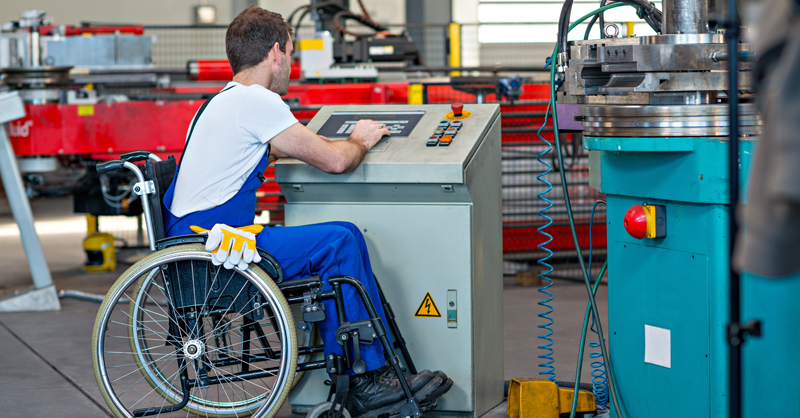
The manufacturing industry in the UK faces significant challenges in fostering diversity and inclusion, particularly regarding the employment of disabled individuals. While gender and ethnic diversity have been prioritised, disability inclusion remains largely overlooked, despite disabled people making up 23% of the UK’s working-age population. Persistent employment and pay gaps, alongside digital skill disparities, further hinder access to opportunities in manufacturing.

This project examined how digital technologies, inclusive management, and accessible business practices can bridge these gaps. Adopting a socio-technical approach, the project team envisions a future where technological advancements align with workplace inclusivity, supporting disabled employees through innovations such as AI-powered automation, VR training, and assistive robotics.

This report introduces a 2040 scenario, centring on Josie, a disabled manufacturing worker, to illustrate how technology and societal shifts can create an inclusive workforce. Insights from industry stakeholders validated the feasibility of these advancements but also highlighted barriers, including unequal access to digital tools and employer reluctance to accommodate disabled workers.

Key Visions for an Inclusive Future:

  1. Inclusive Society – Equal access to digital skills education and training from an early stage.
  2. Inclusive Technology – Enhanced accessibility to digital tools for individuals and SMEs.
  3. Inclusive Workplace – Overcoming physical and attitudinal barriers through flexible policies and leadership awareness.

Policy Recommendations:

  1. Inclusive Education & Training – Manufacturing skills programs must be tailored for disabled individuals.
  2. Collaboration Between OEMs & SMEs – Industry-wide partnerships to ensure accessible technology adoption.
  3. Supported Employment Initiatives – Proving the value of disabled workers in manufacturing through structured programs.

By aligning technological advancements with inclusive policies and workplace adaptations, the manufacturing industry can unlock the full potential of disabled workers, fostering innovation, productivity, and a more equitable workforce.

This research was conducted by Dr. Marisa Smith (University of Strathclyde), Dr. Eun Sun Godwin (University of Wolverhampton), Professor Nigel Caldwell (London Metropolitan University), Dr. John Oyekan (University of York), Dr. Sebastian Pattinson (University of Cambridge). This work was supported by the UKRI Made Smarter Innovation Challenge and the Economic and Social Research Council via InterAct [Grant Reference ES/W007231/1].

Categories
People Productivity Resilience Resources Sustainability

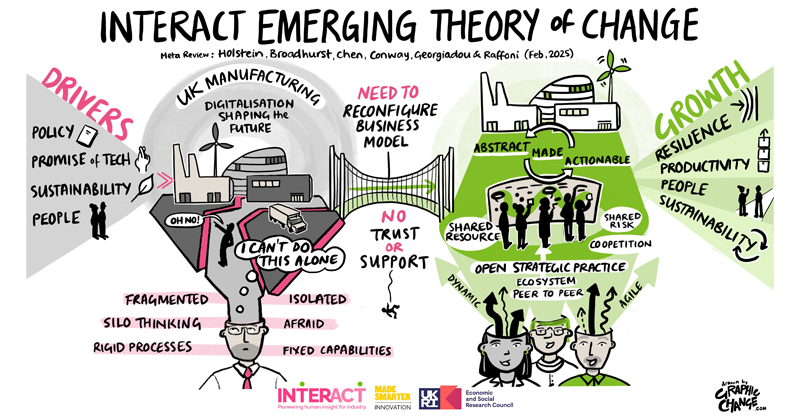
InterAct’s Emergent Theory of Change

Beginning in September 2024, a team of researchers at Loughborough Business School conducted a comprehensive metareview of the research outputs produced by projects funded through InterAct. The review systematically analysed insights from multiple sources, drawing out key lessons for policymakers, businesses, and researchers on how industrial digital technologies (IDTs) are shaping UK manufacturing. Using qualitative coding through NVivo, they identified core themes to provide a cross-cutting analysis of the challenges and opportunities in IDT adoption.

The metareview has generated a range of outputs, including an overarching theory of change, policy briefing and short animation to support manufacturers, technology providers, and policymakers to make informed decisions.

This research was conducted by Dr. Jeannie Holstein, Dr. Kate Broadhurst, Dr. Lei Chen, Dr. Elaine Conway, Dr Elena Georgiadou and Dr. Anna Raffoni (Loughborough Business School). This work was supported by the UKRI Made Smarter Innovation Challenge and the Economic and Social Research Council via InterAct [Grant Reference ES/W007231/1].

Categories
News

InterAct concludes Global programme activities with Sri Lanka conference

In February 2025, the InterAct Team visited Sri Lanka to contribute to the International Conference 2025 – Modern Challenges and Opportunities for the Apparel Industry in Colombo. The conference was organised by University of Monash and the JAAF ( Joint Apparel Association Forum). Sponsors included MAS Holdings, Star, Control Union, Omega Line, Sri Lanka Apparel, Postgraduate Institute of Management and InterAct.

Day One

The conference began with welcome addresses and an overview of sustainability and ESG initiatives from Australia, the UK, and South Asia. The keynote by Prof. Mohan Munasinghe emphasised the risks of climate change and nuclear war, calling for reduced emissions and conflicts. He noted China’s investment in clean technology versus the USA’s investment in war, and the shift in global GDP from G7 to BRICS countries. Prof. Munasinghe outlined three key lessons for sustainability: the importance of the triple bottom line, resource efficiency, and ethical values.

Control Union presented on various accreditation types, emphasising the UN Sustainable Development Goals. Discussions included digital product passports and the need for better data to track progress towards NetZero.

A panel discussion led by Associate Professor Glen Croy covered ESG impacts in the apparel industry. Participants highlighted the significance of community impact, alliances, and better measurement and data.

In the afternoon, a workshop led by Prof. Jillian MacBryde and Yufei Xue focused on shaping a sustainable future for the Sri Lankan apparel industry. Participants were invited to share their thoughts and ideas about ‘creating the future we want’ for Sri Lankan manufacturing, and offered insights including:

  • Participants wanted to achieve sustainability through options such as zero landfill usage, renewable energy, ethical fashion, and circular economy models, focusing on reducing environmental impact and promoting responsible resource consumption.
  • AI, smart manufacturing, distributed apparel systems, and advanced materials are recurrent themes, aiming to integrate cutting-edge technology in production, supply chain management, and product design.
  • The importance of SMEs, investment in people, regulatory alignment, and capability building is essential, with a shift towards fair trade, transparency, and accountability across the supply chain.
  • Participants emphasised a balance between revenue growth and ethical production, aiming for fair wages, worker well-being, and an inclusive ecosystem alongside financial success.
  • Technology advancement is recognized as an vital driving force with a high positive impact on delivering the vision for the industry.
  • Advanced technology offers avenues to improve productivity, quality, and efficiency in apparel manufacturing, enhancing sustainability practices, but requires significant investment in training, infrastructure, and research, while addressing job displacement and cybersecurity risks.
Day Two

The second day was a series of academic talks and discussions hosted by the Postgraduate Institute of Management (PIM). The day started with opening addressed by Professor Asanga Ranasinghe – Director, PIM  and Professor Amrik Sohal, Chair of the Conference, Monash University. Keynote presentations were delivered by Associate Professor Glen Croy, Monash Business School, Monash University, Australia and Professor Jillian MacBryde, University of Strathclyde, Scotland.

Throughout the day, sessions focused on topics like: “People and Relationships”, “Circular Economy and Sustainability” and “Technology and Automation”. During these talks, it was highlighted that apparel exports from Sri Lanka are already between $4-6 billion in value per annum, with the sustainable apparel scope report suggesting that by 2032 the market could be worth as much as $24bn.

Day Three

On the third day of the mission, the InterAct team was able to visit a variety of local manufacturing sites, learning more about the operations of manufacturers in the region:

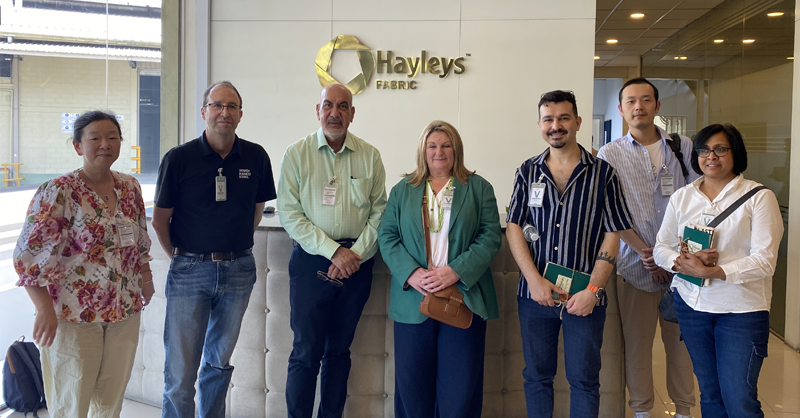
Site Visit 1: Hayleys
Hayleys, a fabric manufacturer deeply committed to ESG principles, emphasises their sustainability strategy “lifecode”. This approach focuses on going beyond compliance, committing to the basic rights of fresh air, water, and life, influenced by Buddhist culture.

Established in 1885, the South Asia Textiles factory the team visited is part of Hayleys, a multinational company with diverse sectors. The plant employs around 1,400 people out of 3,000 across the group. Working with big brands, Hayleys differentiates itself through innovation, product development, and sustainability.

At Hayley’s site we saw the centrality of ‘people’ practices to a manufacturing business, with strategic level consideration of employee wellbeing as a priority. With employees recruited locally, the business has fostered a strong sense of community and works on local initiatives including community health and biodiversity.

Site Visit 2: Eco Spindles
Eco Spindles, part of BPPL, focuses on PET waste collection and recycling, converting PET flakes to filament yarn using advanced technology.

They collaborate with brands like Decathlon, Tesco, and Nike, promoting sustainable business practice through various innovative product lines such as ECOS Green and Oceanic. Their marketing targets brand owners, garment manufacturers, fabric producers, and yarn manufacturers. Eco Spindles also engages in mechanical and chemical recycling of textiles, with significant investments in solar and biomass energy. The company has received numerous awards, including Forbes’ Best under £1 billion in 2021.

Site Visit 3: Star Innovation Centre
Star, established in 1978 and acquired by Komar, focuses on high-value apparel production with a workforce of 10,000 across 11 factories, producing 1.6 million garments a month. The Innovation Centre, located near the airport, is a carbon-neutral facility recognized as the Best Workplace in 2023.

Star focuses on key tenets of improving sustainability and implementing innovative technology, investing 2% of turnover in sustainability marketing and carbon credits. Despite the challenges of implementing new technology due to the unique characteristics of garment manufacturing, they have made significant investments in digital technology. Developments include: in-house design, 3D, and virtual reality, reducing sample making time and waste, while boosting overall productivity.


More details of our Sri Lanka mission and other Global visits will be available in our forthcoming InterAct Global report.
Categories
News

InterAct hosts ‘Creating the Future We Want’ Celebration Event

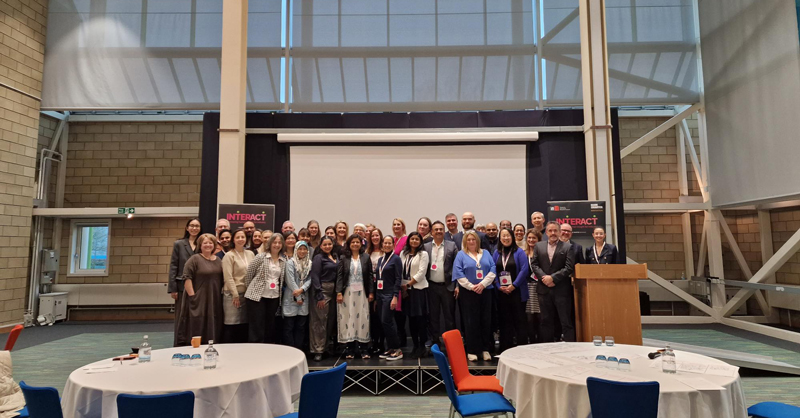
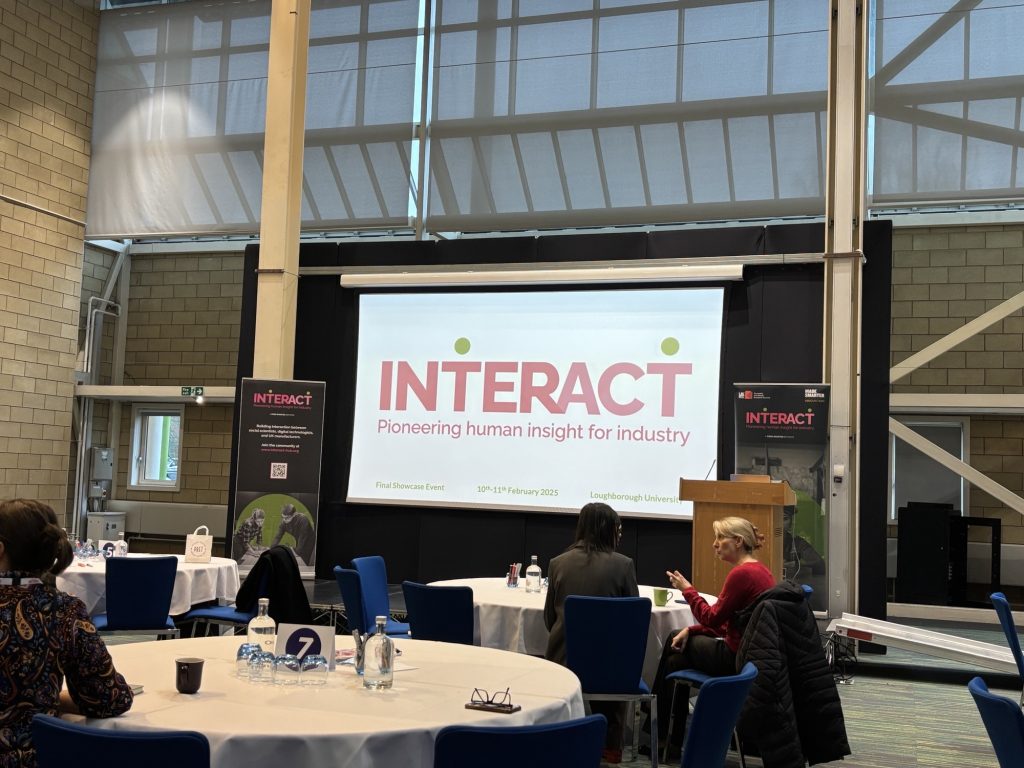
InterAct’s Celebration Event was hosted at Holywell Conference Centre, Loughborough University, on 10th and 11th February 2025. The event brought together a wide range of individuals involved in all elements of InterAct, from Core and Commissioned Researchers to Strategic Advisory Board members and Global Mission collaborators.

The central theme of the conference surrounded ‘what is next?’, allowing participants to identify future collaboration interests and work towards new ideas and funding opportunities as a result of their time with InterAct.

The first day of the event featured a sandpit session hosted by The Collective. This was an intensive, interactive, and free-thinking environment for groups to develop innovative research ideas for potential future funding.

The team enjoyed a three-course dinner at Burleigh Court in the evening, celebrating the outcomes of the project and exciting prospects for future collaboration.

The second day of the event featured a showcase session, allowing the Core and Commissioned Research teams to showcase the outcomes and impacts of their work to colleagues, as well as the funding council Economic and Social Research Council (ESRC), senior members of Made Smarter Innovation Challenge and the InterAct Strategic Advisory Board.

During the day, Boxset Media collected video of the event, as well as interviewing key InterAct members about their experiences on the project. We were also joined by graphic recorder Cara Holland, who turned the discussions of the day into illustrations. These videos and illustrations will be made available on the InterAct website.

As the curtains closed on the Celebration Event, InterAct Co-directors Professor Janet Godsell and Professor Jillian MacBryde expressed their gratitude for the attendees that contributed to such a vibrant and collaborative event atmosphere, as well as all those that have been involved in InterAct throughout the project.

We look forward to seeing what is next for the future of the InterAct Network.

Download “InterAct celebration event sketch” Final_InterAct_illustration.jpg – Downloaded 0 times – 8.00 MB
Categories
InterAct Blog

Breaking down the barriers to deep tech adoption will be critical to improving supply chain resilience in the UK

Factors such as climate change, the COVID-19 pandemic and ongoing global regulatory hurdles have all exposed the fragility of global supply chains. It is now more essential than ever that continued collaboration, and the adoption of digital technologies are encouraged to help build more sustainable, efficient and resilient supply chains that remain strong in the face of external challenges. Doing so will be critical to improving supply chain resilience in the UK, but the barriers to adoption must be broken down first.

Addressing the SME gap

Research from the Made Smarter Innovation | Digital Supply Chain Hub reveals organisations’ top priorities and interests when it comes to digitalising their supply chains, and the barriers preventing them from doing so. What’s clear is that interest in adopting digital supply chain technologies continues to grow in parity with the changing commercial climate, but that barriers to adoption amongst SMEs must be addressed as a priority.

A total of 502 large UK manufacturers and 502 UK SME manufacturers were surveyed as part of this research. The findings show that SME manufacturers are less likely to prioritise adopting digital supply chain technologies than large businesses. Adopting new digital supply chain technologies is a top three priority for large manufacturers along with improving market reputation and reducing costs. The discrepancy between SMEs and large businesses is particularly important, given the economic value of SMEs and the role they play in broader sectoral growth and development.

In fact, the research further found that adopting new digital supply chain technologies is less likely to be cited as a top business priority for SMEs than reducing costs, increasing brand awareness, improving market reputation, and enhancing customer satisfaction. Despite the lack of prioritisation, the research did find growing interest in advanced digital technologies amongst SMEs, promising a new era of supply chain innovation amongst SME leaders.

Recognising the growing interest in digital supply chain technologies

While falling behind their larger counterparts, the tide may well be turning for SMEs, with a growing number looking to improve their supply chains, with digital technologies and innovation holding the key. The SMEs surveyed are slightly less likely to be prioritising supply chain digital transformation, with 14% saying they don’t currently have any supply chain top priorities. That said however, 44% of these businesses are looking to enhance supply chain efficiency and automation, while a third are prioritising building resilience against disruptions, developing a more sustainable supply chain, and improving visibility and traceability.

While it may appear that SMEs fall behind their larger counterparts when it comes to the adoption of digital supply chain technologies, it is clear that innovation will play a critical role in helping these businesses to achieve their business goals in the long-term, despite the barriers to adoption.

Understanding the barriers to adoption

Above all, businesses are looking to enhance efficiency and automation by digitalising their supply chains, but the barriers to adoption pose a pressing challenge that may inhibit economic growth. While enhancing efficiency and automation, building resilience against disruptions, and developing a more sustainable supply chain are most likely to be cited by large manufacturers as top priorities, the barriers to achieving these commercial objectives vary.

The research shows that businesses of all sizes are facing similar challenges when it comes to adopting digital supply chain technologies. Respondents in both large businesses and SMEs are most likely to say that the most significant barriers hindering digital transformation in their organisation are existing processes, resources and work culture. In light of these barriers to adoption, initiatives and programmes are available to businesses to help them to accelerate the practical application of deep tech solutions and improve UK supply chain resilience.

The value of the Digital Supply Chain Hub and UK SCALE Centre

These barriers to adoption are why initiatives like the Digital Supply Chain Hub and the UK SCALE Centre are vital interventions within often traditionally operated organisations and sectors.

The Digital Supply Chain Hub delivered by Digital Catapult, facilitates the necessary connections, collaboration and knowledge sharing between industry and technology solution providers to improve UK industrial supply chain resilience through the application of deep tech solutions. So far, the programme has 37 funded projects with industry, technology and academic partners, and 255 industry engagements across all manufacturing sectors, demonstrating the value of the programme in supporting both SMEs and larger businesses.

We have been keen to work with the UK SCALE Centre since it’s inception in June 2024 as a way to further develop the future supply chain ecosystem and cross-regional partnerships. I encourage UK industry, academia and supply chain professionals to join and collaborate with the Digital Supply Chain Hub and UK SCALE Centre to further this vital mission across the UK supply chain ecosystem, as we seek to build a more productive, resilient and sustainable future.

This article was published by Loughborough University, read the original version here.

About the author

Tim Lawrence is the Director of the Digital Supply Chain Hub, Digital Catapult in this article, Tim outlines the importance of breaking down technological barriers to improve supply chain resilience in the UK.

Categories
InterAct Blog

Charging Forward: Electric vehicles and what we can learn about the role of Global Value Chains in sustainable manufacturing

Faced with the challenge of climate change, and the growing need for sustainable business practices, it can often be hard to know where to start. In this guide, InterAct researchers examine the critical role of global value chains for the future of UK manufacturing, through the case study of the electric vehicle sector.

The UK automotive industry stands at a crossroads, facing a rapidly evolving landscape driven by the global electric vehicle (EV) revolution. While EVs offer a pathway to a greener and more sustainable future, the challenges of global value chain (GVC) dependencies, rising material costs, and competitive industrial policies present formidable hurdles. InterAct research has delved into these dynamics and outlines strategies for positioning the UK as a leader in sustainability-oriented manufacturing.

Industry in transition

Recent developments underscore the urgency of action. In November 2024, Stellantis announced the closure of its Vauxhall plant in Luton, resulting in 1,100 job losses. This follows Ford’s decision to cut 800 UK-based positions and Nissan’s global reduction of 9,000 jobs, with major potential implications for its UK operations.

These challenges reveal a broader issue: Europe’s historical dominance in the automotive sector is under strain, and the UK must adapt to remain competitive amidst shifting supply chains and mounting global competition. Nor is this unique to the automotive sector, with many organisations and governments in developing economies seeking technology transfer and more equal partnerships as a requirement for access to markets or local production. Explored in our global research missions, the rapid pace of advancement in manufacturing across countries like Singapore, India and Malaysia, highlights the need for the UK to evolve to compete.

The changing EV landscape

The transition from internal combustion engine (ICE) vehicles to EVs, driven by technological advancements, environmental awareness, and significant policy support, is reshaping not only the automotive industry but also the intricate web of GVCs that underpin EV production.

Since 2010, the cost of lithium-ion battery packs has plummeted by 89%, making EVs increasingly competitive with ICE vehicles. EVs now account for a substantial share of global passenger car exports, growing from 4.3% in 2017 to 27.6% in September 2024. This growth has been bolstered by government incentives, such as tax credits and investments in charging infrastructure, and by tightening emission standards.

Germany and China lead the EV sales in export value and quantity respectively. UK-made EVs, while primarily destined for EU markets (accounting for 68% of exports), face pressure, despite being delayed, to comply with rules of origin (RoO) requirements under the EU-UK Trade and Cooperation Agreement (TCA). These rules necessitate higher regional content in EVs and batteries, complicating the supply chain landscape.

With the challenge of where to locate manufacturing, new opportunities are arising through the reshoring or ‘right-shoring’ of production, with localised manufacturing offering improved resilience against global supply chain shocks such as pandemics, conflicts or logistical disruption. Locating manufacturing closer to the consumer base also offers the potential to significantly reduce the carbon footprint of supply chains due to significantly shorter transport links.

Three key trends shaping the future

In September, electric vehicles (EVs) accounted for 27.6% of car sales across 15 major markets, marking a 7.6 percentage point increase year-on-year. The UK ranks fifth globally in EV adoption, underscoring its potential as a leader in this transition. Electrification is the future, but progress hinges on a stable, predictable policy environment that encourages investment and innovation. It is therefore essential that manufacturers make their voice heard, with collective messaging to government and policymakers that can cut through the noise, encouraging a clearly articulated vision and strategy.

While China continues to dominate the lithium-ion battery market, European nations such as Poland, Hungary, and the Czech Republic are emerging as key exporters of EV batteries. Meanwhile, the Inflation Reduction Act in the US has spurred the growth of US electric vehicle innovation and production. In the face of such major competition, the UK should seriously consider aligning closely with EU supply chains to potentially enhance resilience and competitiveness, ensuring the automotive sector remains integrated into global markets. This consideration is especially relevant in light of recent EU legislation surrounding traceability and digital product passports, explored in an InterAct funded research project.

Success in the automotive industry increasingly relies on building efficient and adaptable supply chains, not just manufacturing the best vehicles. This requires collaboration, investment, and strategic vision—elements that are difficult to achieve without systemic support. InterAct’s ‘Scenarios 2040’ work from researchers at Loughborough University has highlighted the essential importance of taking a full ‘ecosystem’ approach to the future of the sector, with manufacturers working with suppliers across their supply chain to determine the most viable and beneficial future for everyone.

A moment for strategic decision-making

The UK manufacturing sector is at a pivotal moment. Sustaining its position in this high-stakes global competition will require visionary leadership, robust policy support, and alignment with broader industrial strategies. The alternative—neglect or fragmented efforts— is likely to result in a gradual decline of one of the UK’s historically significant sectors.

If the UK Industrial Strategy is to back industries such as automotive manufacturing with bold action instead of pivoting decisively towards other emerging opportunities, then policymakers and manufacturers need to explore and adopt strategic recommendations. In the case of the automotive industry shift to electric vehicles, these are:

  • Invest in local battery production facilities and recycling initiatives to reduce dependency on imports and align with RoO requirements.
  • Promote innovation in battery technology to improve efficiency and lower costs.
  • Negotiate flexible trade agreements that account for the complexities of GVCs.
  • Strengthen partnerships within the EU to ensure seamless access to key markets.
  • Diversify sources for critical materials to mitigate geopolitical and market risks.
  • Establish regional partnerships to secure stable supply chains for EV production.
Charting a Path Forward

The success or failure of the UK manufacturing sector over the next few decades hinges on its ability to adapt to the changing global landscape. By addressing critical dependencies and fostering innovation, the sector can leverage the opportunities presented by the green technology revolution. With strategic investments and policy alignment, the UK can solidify its position and push towards a bright manufacturing future.